

Producing Energy Talent: 30 M2BEE Participants as Indonesia’s Response to the Global “Green Job Gap” Challenge
Facing Reality: Transition Challenges and the Talent Gap
Amid Indonesia’s ambitious energy transition agenda, the country faces a significant challenge in managing energy consumption, which continues to grow by 3–5% annually (HEESI, Ministry of Energy and Mineral Resources). By 2045, the green jobs sector is projected to require up to 1.3 million specialized workers in energy efficiency alone (ETP UNOPS, 2025).
However, a serious obstacle has emerged—known as the “green gap.” Currently, there is a global shortage of 12.3% in skilled energy transition professionals. Without strategic intervention, national energy efficiency targets will be difficult to achieve due to the lack of qualified energy managers and auditors capable of managing rising energy demand in line with regulations.
“The partnership between Indonesia and the United Kingdom through UK PACT Phase 2 in the M2BEE program is not merely technical support—it is a real investment in a country’s most valuable asset: its youth. We are proud to support the development of energy efficiency experts who will stand at the forefront of the global energy transition.”
— Ianto Jones, Head of Low Carbon Energy and Infrastructure, British Embassy Jakarta
M2BEE: More Than Just an Internship
The Student Internship Program in Energy Efficiency (M2BEE) aims to bridge the gap in green skills shortages by developing competencies through hands-on experience, enhancing the capacity of future energy management talents in an optimal and sustainable way.
M2BEE serves as a tangible solution through a pentahelix collaboration involving the Directorate General of New, Renewable Energy and Energy Conservation (EBTKE), IREEM, and support from UK PACT Phase 2.
“M2BEE is not just an administrative internship it focuses on the practical implementation of energy management. This includes appointing energy managers, developing efficiency programs, conducting energy audits, and delivering recommendations. The key point is understanding that energy efficiency is a ‘fast fuel’ the quickest step toward energy resilience and independence before calculating the need for new renewable energy supply.”
— Dr. Ir. Hendra Iswahyudi, M.Si., Director of Energy Conservation, EBTKE–EBTKE
This year, M2BEE selected 30 engineering students from six leading partner universities: Universitas Indonesia (UI), Universitas Gadjah Mada (UGM), Universitas Multimedia Nusantara (UMN), Universitas Jenderal Soedirman (Unsoed), Universitas Muhammadiyah Bandung (UMB), and Universitas Pembangunan Nasional (UPN) Veteran Jakarta.
The cohort consists of 18 male and 12 female students, achieving 40% female representation. This reflects M2BEE’s strong commitment to GEDSI (Gender Equality, Disability, and Social Inclusion), ensuring inclusive participation in developing competitive future energy talents.
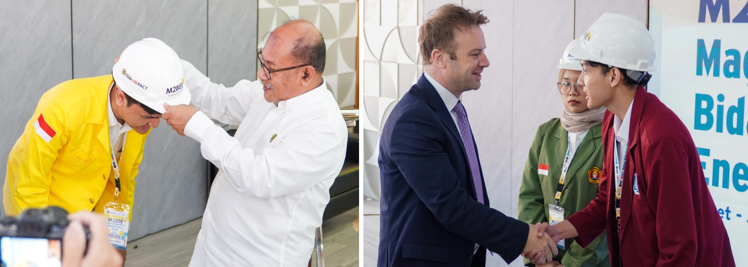
Dr. Ir. Hendra Iswahyudi, M.Si. (left), Director of Energy Conservation at DJEBTKE– MEMR, and Ianto Jones, Head of Low Carbon Energy and Infrastructure at the British Embassy Jakarta (right), symbolically placed safety helmets on participant representatives as a mark of the official launch of the M2BEE 2026 program.A Transformational Journey: From Bootcamp to Certification
Over five intensive days, participants underwent a structured curriculum combining character development and technical mastery:
Day 1 – Synergy and Team Building
Participants began by strengthening collaboration and learning spirit through team-building activities, with a strong emphasis on GEDSI perspectives in green jobs.
Day 2 – System Management Foundations
Participants built a technical foundation in Energy Management Systems (EnMS), covering energy fundamentals, EnMS introduction, and audit planning guided by IREEM experts.
Day 3 – Real-World Exposure
Participants conducted site visits to strategic buildings such as Wisma Danantara to observe cooling systems and electrical loads in real-world conditions.
“Students can directly observe real equipment related to energy efficiency. This is crucial because tools previously learned only in theory can now be seen and understood in actual operation.”
— Gempur Soesetyo Hadi, President Director, PT Gedung Bank Exim (GBE)
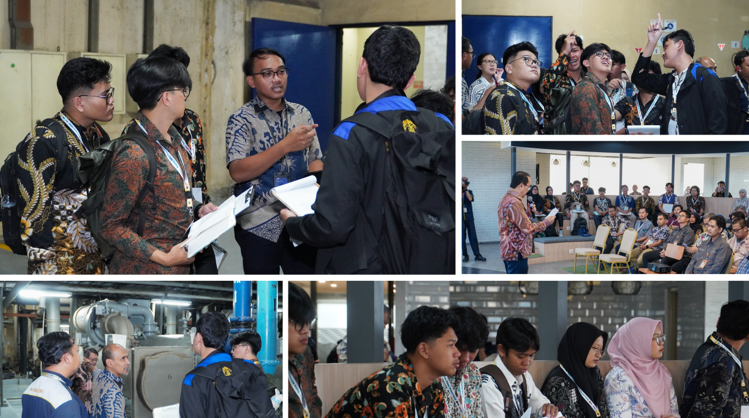
M2BEE participants had the opportunity to conduct a site visit to the Danantara Building to observe the implementation of energy management firsthand and engage in discussions with field operators. The group was warmly welcomed by Gempur Soesetyo Hadi, President Director of PT Gedung Bank Exim (GBE).
Day 4 – Practical Action & Official Launch
The program was officially launched in a ceremony attended by the British Embassy and inaugurated by Dr. Hendra Iswahyudi through a symbolic safety helmet placement.
Participants then conducted independent energy audits at the EBTKE Directorate building, utilizing professional tools such as Lux Meters and Power Meters to measure lighting and electrical loads.
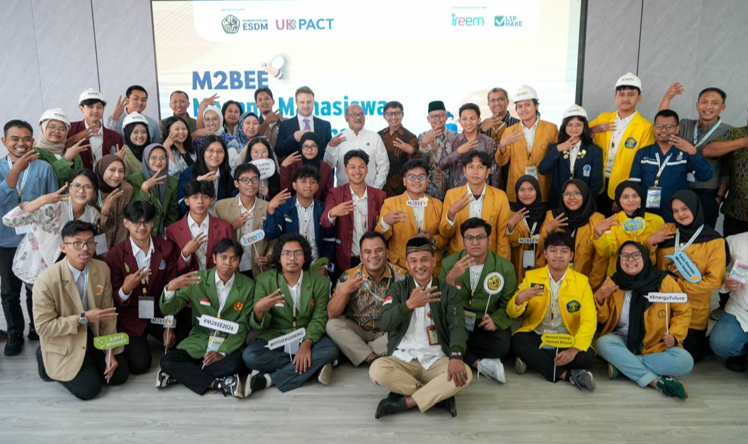
M2BEE Launch Moment: Dr. Ir. Hendra Iswahyudi, M.Si. from the Ministry of Energy and Mineral Resources and Ianto Jones from the British Embassy Jakarta, together with the UK PACT Palladium Group, EBTKE, and IREEM teams, 30 participants, and faculty advisors, celebrated the first milestone of this program.
M2BEE is ready to provide students with valuable hands on experience through the development of green skills competencies to support energy sustainability in Indonesia.
Participant Testimony
“This program has broadened our understanding of energy efficiency from technology, economics, and business aspects to global challenges. Beyond technical knowledge, we were also trained by professionals on how to effectively communicate our ideas and analysis. We are committed to applying this knowledge to contribute to our universities, our country, and the world for a better future.”
— Annisa Ramadani, Participant from Universitas Indonesia
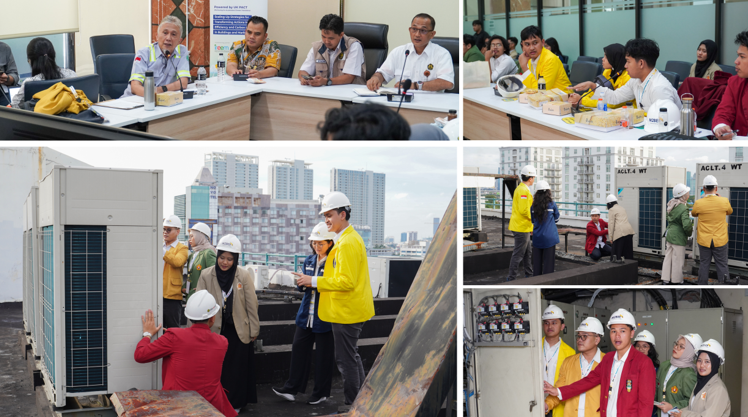
After the official launch, the 30 M2BEE participants conducted independent energy audit practices at the Slamet Bratanata Building within the Ministry of Energy and Mineral Resources. Guided by expert teams from EBTKE and IREEM, these young talents directly applied the use of measurement instruments and analyzed energy loads across the building’s mechanical and electrical systems. This hands-on experience represents a crucial step in developing green skills competencies to support Indonesia’s energy transition.
Day 5 – Advocacy & Presentation: Turning Data into Strategic Action
The program culminated in communication and advocacy training delivered by the UK PACT Palladium team. This session emphasized that strong audit data alone is insufficient without effective communication to decision-makers.
Participants were trained not only to operate technical tools but also to transform complex findings into persuasive, structured, and stakeholder-friendly messages.
The session concluded with participant presentations, expert discussions, and certificate awards as a symbol of readiness to enter the professional field.
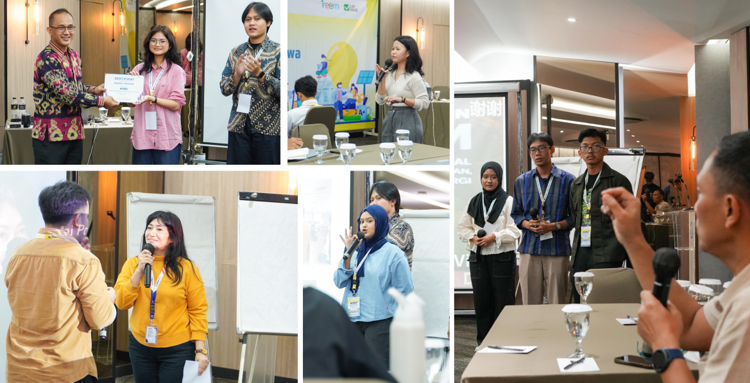
Day 5 of the M2BEE Bootcamp: The UK PACT Palladium team equipped participants with Communication and Advocacy techniques. These emerging energy talents were trained to become policy communicators capable of transforming technical data into persuasive messages for stakeholders.
The presence of Dr. Ir. Arief Yunan, M.Si., IPU, ASEAN Eng. (Executive Director of IREEM) and Dr. Ir. Saleh Abdurrahman, M.Sc. (Member of the National Energy Council 2026–2030 & Advisory Board of IREEM) provided strong emphasis on the program’s long-term vision.
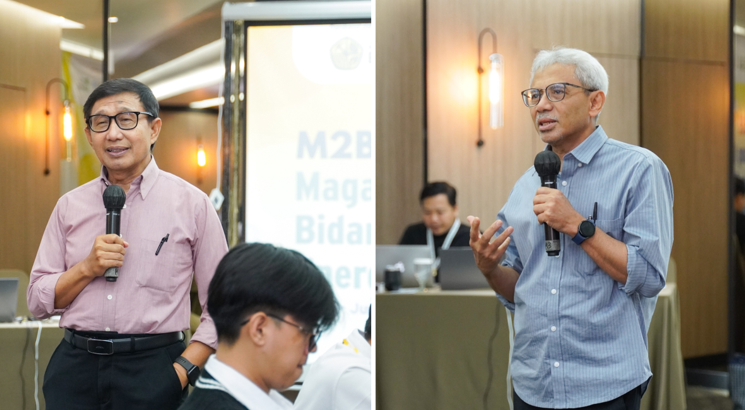
Participants were encouraged not only to become technicians but to transform into Energy Efficiency Ambassadors. Great expectations are placed on these young talents to become driving forces of the energy transition within their respective campuses from educating their peers to delivering strategic advocacy to university leadership.
The bootcamp concluded with a presentation session where participants showcased the results of their independent energy audit practices before experts and fellow participants. During dynamic Q&A sessions, they demonstrated their ability to defend data-driven arguments. As a symbol of their readiness to enter the field, the program closed on a prestigious note with the awarding of official certificates signed directly by the Director of Energy Conservation at the Ministry of Energy and Mineral Resources—marking the emergence of a new generation of energy professionals who are competent, technically skilled, and proficient in advocacy.
Expected Impact: Planting the Seeds of Sustainability
Following the training, participants will undertake a two-month internship to produce energy audit reports and actionable efficiency recommendations. The expected impacts are clear:
- For Participants: Building professional portfolios and obtaining official certifications to support careers in green jobs.
- For Institutions: Optimizing energy performance, leading to cost efficiency and reduced energy consumption.
- For the Nation: Directly contributing to government targets in achieving energy resilience and the transition toward Net Zero Emissions.
M2BEE is not merely an internship program it is a competency acceleration initiative designed to prepare Indonesia’s future energy talents to be inclusive, technically capable, and strong in advocacy.
Follow the journey of M2BEE talents on IREEM’s social media channels.
#IREEM #GreenSkills #M2BEE #EnergyAction #BootcampM2BEE #Sustainability